August 19, 2026
Praxen 1.3: Thinking Modes, and Scores Rebuilt from Evidence
Praxen 1.3 adds opt-in high and x-high thinking modes that catch what a single scan misses, and rebuilds RAISE scoring so every score traces to evidence on disk.

Open Agent and AI Security Community
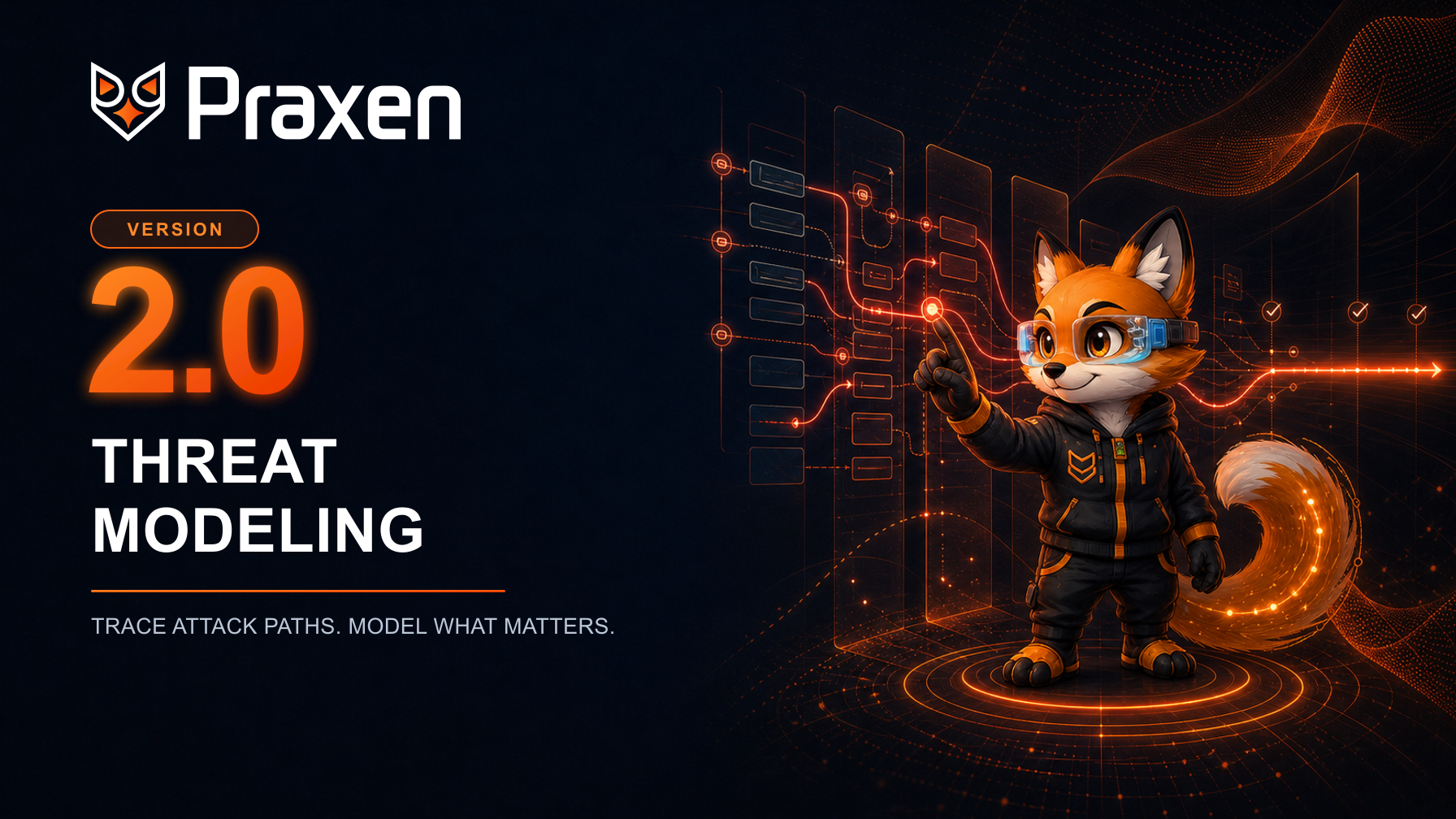
The Praxen 2.0 public beta turns an agent's own code into a live, visual threat model — trust boundaries, STRIDE threats, and attack paths you can follow by hovering, with every element citing file:line evidence. Install it side by side with the stable release today.
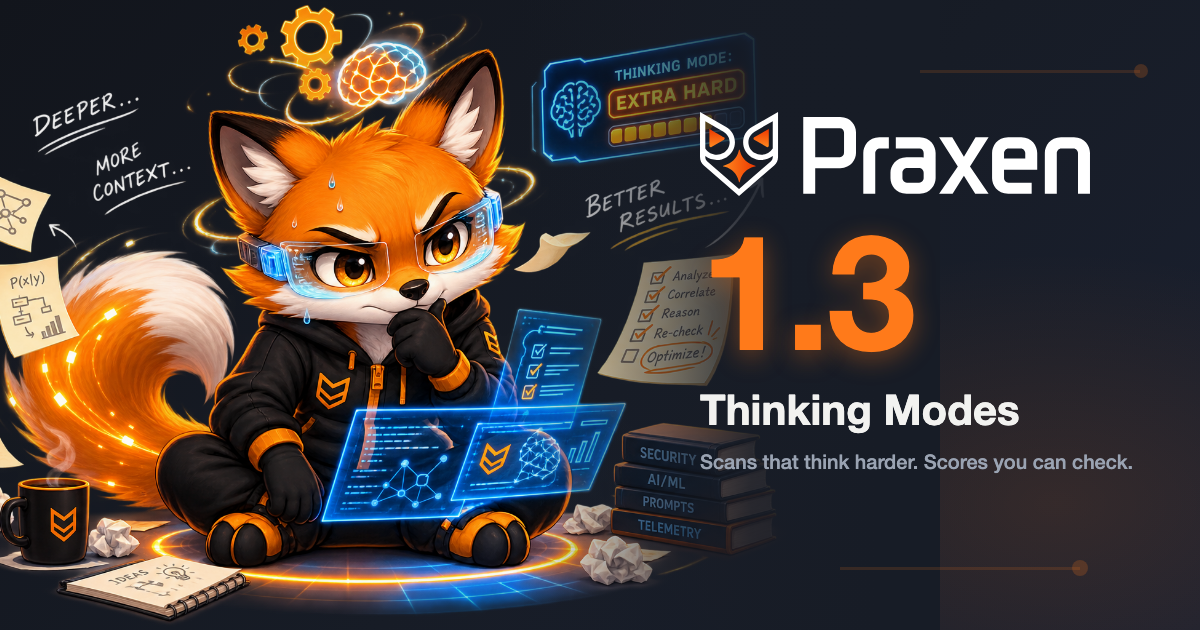
Praxen 1.3 adds opt-in high and x-high thinking modes that catch what a single scan misses, and rebuilds RAISE scoring so every score traces to evidence on disk.
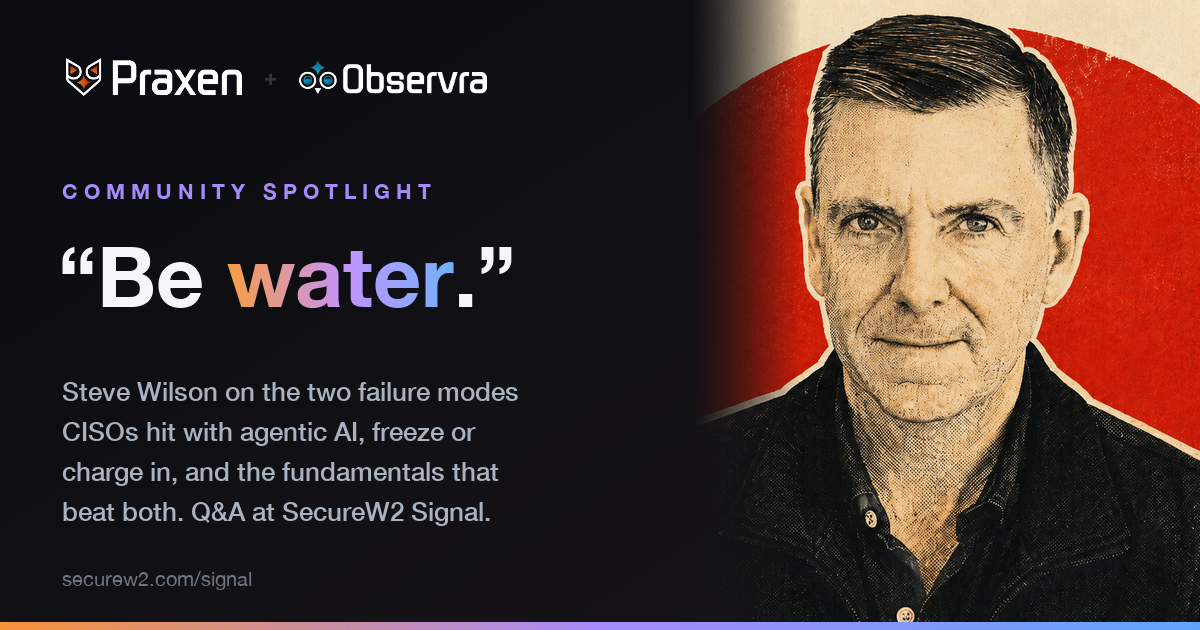
SecureW2's Signal blog sits down with Steve Wilson on the two failure modes CISOs hit with agentic AI, freeze or charge in, and the fundamentals that beat both. The scanner and the monitoring questions he describes are exactly what Praxen and Observra exist to answer.

A fast-follow to Praxen 1.2 — polish for reports and docs, supply-chain hardening for how we ship, and a verification story about keeping the benchmark honest. Your scores don't move.
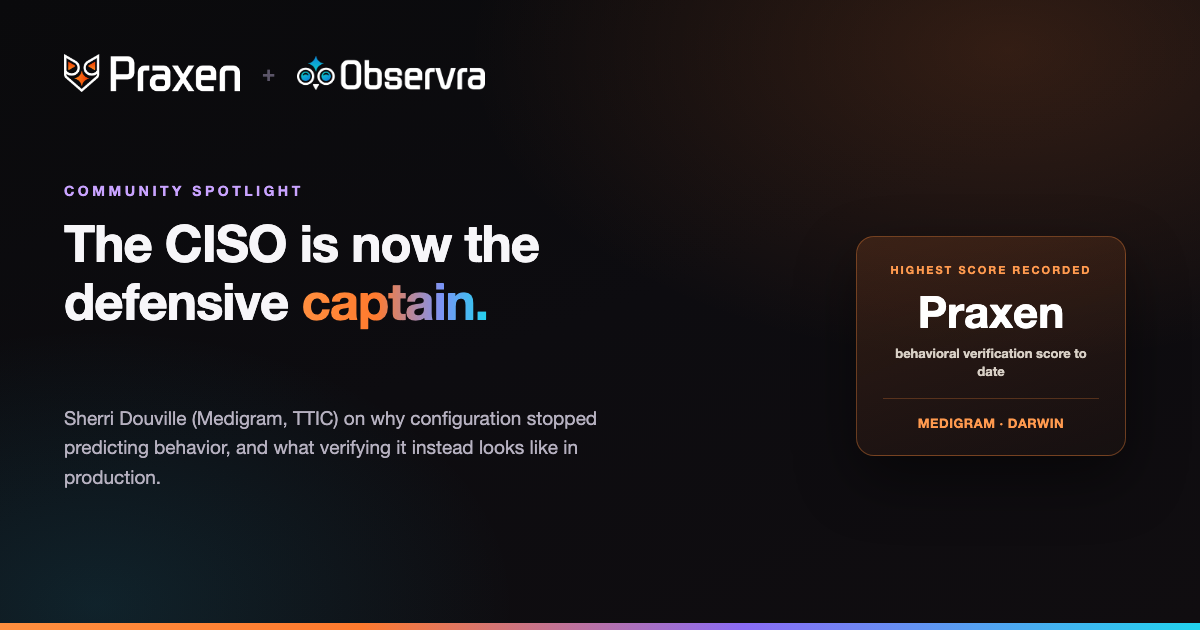
Sherri Douville (CEO, Medigram; Chair, TTIC) argues the CISO's job has shifted from documenting controls to verifying behavior, and points to Medigram's Darwin deployment, the highest Praxen behavioral score recorded to date, as the proof.
UK-based CogniSafe, an AI trust and safety platform, has adopted Observra as the telemetry layer for its runtime scoring pipeline, plugging straight into the events teams already collect instead of building its own instrumentation.
Observra 1.1 opens its telemetry pipeline to any custom agent framework — no adapter required — plus local storage, a live terminal dashboard, and support for 100+ LLM providers.

Our newest open-source project is a browser platformer that teaches the 2026 OWASP Top 10 for LLM Applications, one stomped vulnerability at a time. No install, no account, no homework. Just play.
Praxen 1.2 aligns risk findings to the 2026 OWASP Top 10 for LLM Applications, with clearer scoring, scan-to-scan comparisons, and a new shareable Worker Remit.
A developer building a security-sensitive AI agent put Praxen to work on their own codebase. Here's what it found, and how fast it got fixed.

Community member Steve Wilson argues that securing AI agents doesn't call for new theory, just the basics applied properly, verifying behavior before deployment, building real audit trails, and treating agents as identities the SOC actually watches.
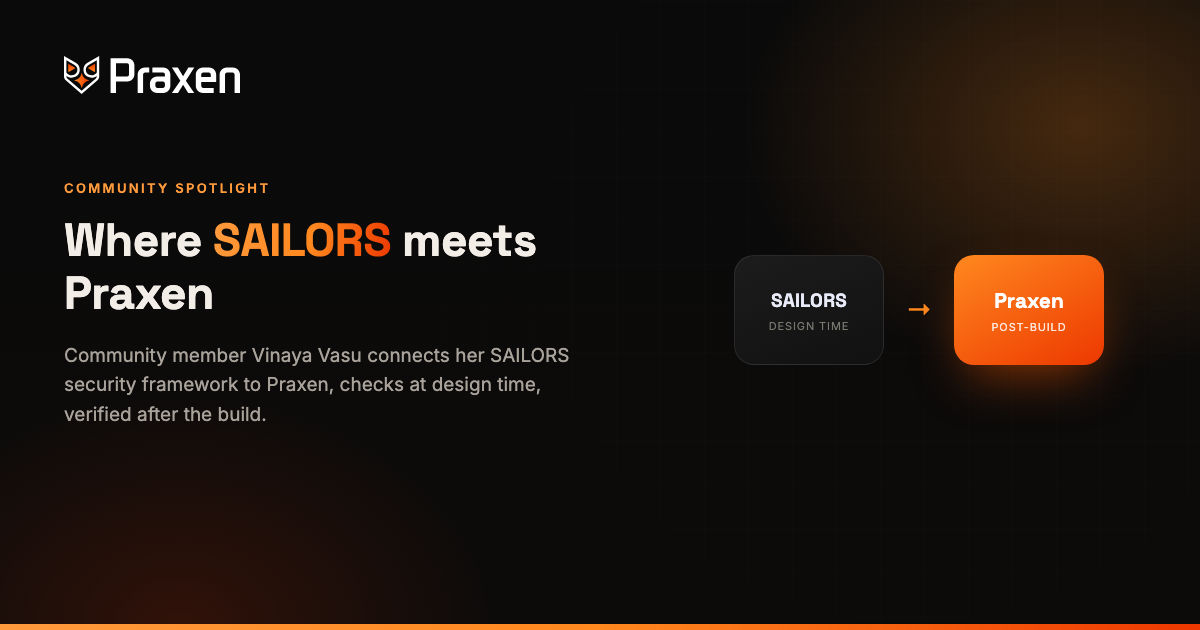
Community member Vinaya Vasu connects her SAILORS security framework to Praxen, showing how design-time checks and post-build verification reinforce each other.
Our LinkedIn community is live — join for release announcements, discussion, and news from the people building Observra and Praxen.

Community member Steve Wilson used Praxen to test 12 open-source agent projects against both the OWASP LLM and Agentic Top 10 — and found the two risk taxonomies overlap more than most people expect.